
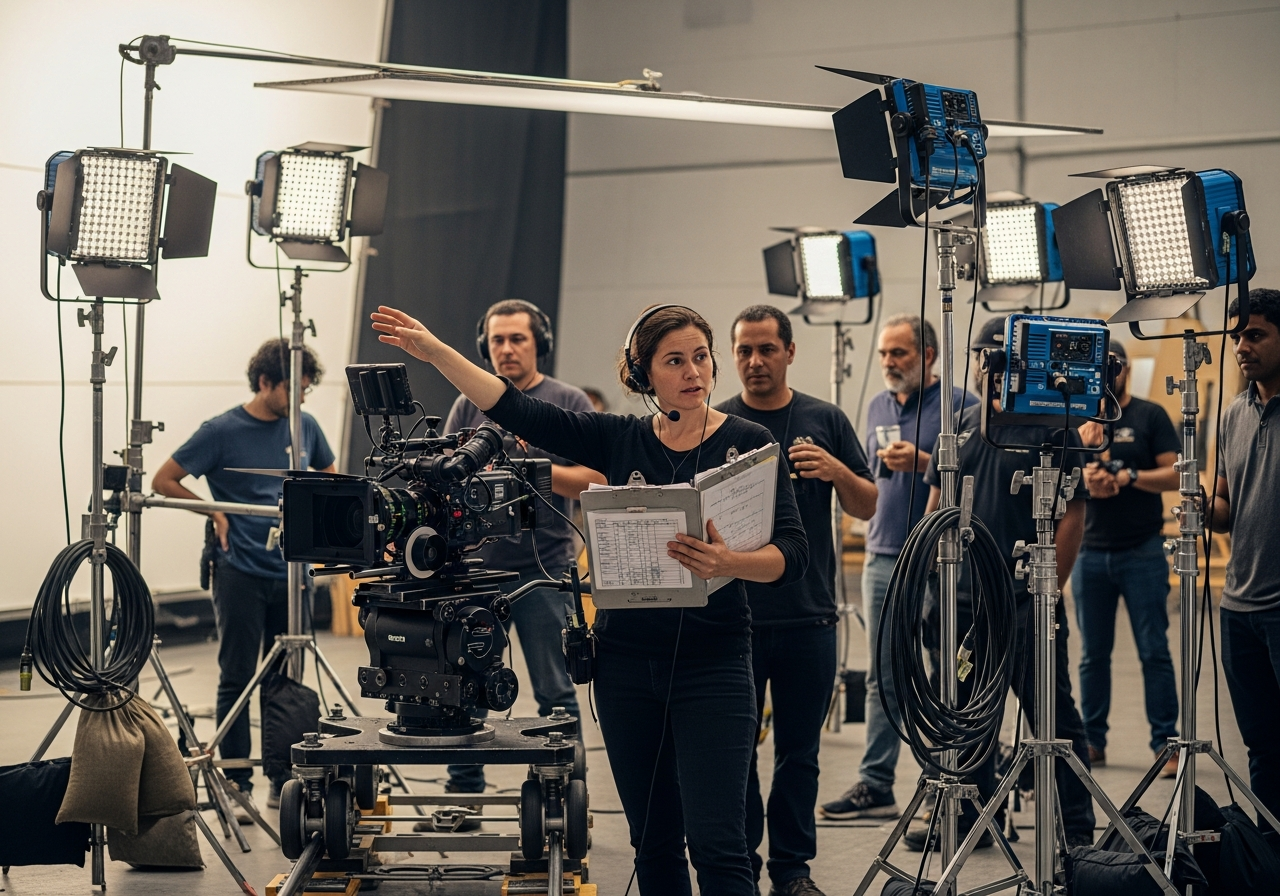
The role of a 1st Assistant Director represents one of the most critical positions in Canadian film production, serving as the director’s right hand and the operational backbone of any successful shoot. According to industry organizations like Reel Canada and the Directors Guild of Canada (DGC), producers seek AD candidates who can seamlessly bridge creative vision with logistical execution, ensuring productions stay on schedule and within budget while maintaining the highest safety standards.
What makes an exceptional Assistant Director candidate in Canada’s competitive film landscape goes far beyond basic organizational skills. Producers prioritize individuals who demonstrate exceptional multitasking abilities, diplomatic communication skills, and comprehensive understanding of production workflows. The pathway typically begins with Production Assistant roles, where aspiring ADs can develop foundational skills without prior experience, gradually building the expertise and DGC logbook hours required for advancement to senior positions.
Core Responsibilities of a 1st Assistant Director
The 1st Assistant Director serves as the primary coordinator between the director’s creative vision and the practical realities of film production. Their responsibilities span from initial script breakdown through final wrap, requiring expertise in scheduling, crew coordination, and on-set management. According to Reel Canada guidelines, successful ADs must master both pre-production planning and real-time problem-solving during filming.
Effective Assistant Directors understand that their role extends beyond simple task management to encompass safety oversight, departmental communication, and maintaining production momentum. They must anticipate potential issues before they arise while keeping all crew members informed and coordinated throughout the shooting process.
Pre-Production Planning
The pre-production phase demands meticulous attention to detail and strategic planning capabilities from Assistant Director candidates.
- Complete comprehensive script breakdown, identifying all cast, locations, props, and special requirements for each scene
- Develop detailed shooting schedules using industry-standard software like Movie Magic Scheduling
- Create accurate call sheets specifying crew call times, location details, and daily requirements
- Coordinate with department heads to establish realistic time estimates for complex scenes
- Prepare contingency plans for weather delays, equipment issues, and other potential disruptions
On-Set Management
Once filming begins, the Assistant Director transitions into active set management, coordinating multiple departments while maintaining production flow. Key responsibilities include delegating tasks to the 2nd and 3rd ADs, ensuring all safety protocols are followed, and managing the pace of filming to meet daily page count goals.
The AD must also handle the technical aspects of set communication, including calling “roll sound,” “roll camera,” and “action” when delegated by the director. They serve as the primary point of contact for resolving conflicts between departments and ensuring that crew members understand their responsibilities for each setup.
Essential Skills Producers Prioritize
Canadian producers consistently seek Assistant Director candidates who demonstrate a specific combination of technical competencies and interpersonal skills. The demanding nature of film production requires ADs who can maintain composure under pressure while effectively communicating with diverse teams.
- Exceptional multitasking abilities to coordinate multiple departments simultaneously
- Strong diplomatic communication skills for managing conflicts and maintaining crew morale
- Comprehensive safety knowledge including emergency procedures and set protocols
- Advanced problem-solving capabilities for addressing unexpected challenges
- Leadership qualities that inspire confidence and cooperation from crew members
- Time management expertise to maintain shooting schedules and meet daily goals
Technical and Soft Skills Breakdown
Understanding why producers value specific skills helps Assistant Director candidates focus their professional development efforts. The following breakdown illustrates how individual competencies translate into production value for Canadian filmmakers.
| Skill | Why Producers Value It | Canadian Example |
|---|---|---|
| Crisis Management | Minimizes costly production delays | Managing sudden weather changes during Alberta winter shoots |
| Crew Psychology | Maintains morale during long days | Coordinating meal breaks during 14-hour Toronto shoots |
| Safety Protocol | Prevents accidents and liability issues | Implementing COVID-19 protocols on Vancouver sets |
| Budget Awareness | Controls overtime and equipment costs | Managing union meal penalties on Quebec productions |
| Technology Proficiency | Streamlines communication and scheduling | Using digital call sheets for remote Maritime locations |
| Cultural Sensitivity | Facilitates diverse crew collaboration | Coordinating bilingual crews in Montreal |
Experience and Career Path Expectations
The journey to becoming a 1st Assistant Director in Canada follows a well-established progression that begins with Production Assistant roles and advances through documented experience and union requirements. The Directors Guild of Canada provides clear guidelines for advancement, requiring specific logbook hours and demonstrated competencies at each level.
Producers understand that exceptional ADs develop their skills gradually, starting with basic set responsibilities and progressively taking on more complex coordination tasks. The DGC logbook system ensures candidates gain comprehensive experience across different production types and departmental interactions before advancing to senior positions.
Entry-level Production Assistant positions require no prior experience, making them accessible to newcomers willing to learn. However, advancement to Assistant Director roles demands demonstrated reliability, strong communication skills, and comprehensive understanding of production workflows developed through hands-on experience.
From PA to 1st AD
The progression from Production Assistant to 1st Assistant Director represents a structured career path with specific requirements and milestones defined by industry standards.
- Begin as Production Assistant, learning basic set protocols and departmental functions
- Advance to 3rd Assistant Director, handling background coordination and crowd control
- Progress to 2nd Assistant Director, managing call sheets and crew logistics
- Accumulate required DGC logbook hours demonstrating competency at each level
- Complete mandatory safety training and certification programs
- Gain recommendation from established 1st ADs and producers for advancement opportunities
Union Qualifications in Canada
DGC membership requirements vary by province but generally include documented hours of experience, references from industry professionals, and completion of specific training programs. Union membership provides access to higher-budget productions and standardized rate structures while ensuring adherence to industry safety and professional standards.
Non-union markets like Manitoba offer opportunities for emerging ADs to gain experience on smaller productions before pursuing union membership. These markets often serve as training grounds where candidates can develop skills and build industry relationships necessary for career advancement.
Knowledge of Production Departments
Successful Assistant Directors must understand how each production department operates and how their work impacts the overall filming process. This knowledge enables effective coordination and realistic scheduling while helping ADs anticipate potential conflicts between departmental needs.
| Department | AD Role | Coordination Needs |
|---|---|---|
| Cinematography | Schedule lighting setups and camera moves | Realistic time estimates for complex shots |
| Sound | Coordinate boom operator positioning | Minimize ambient noise during takes |
| Art Direction | Plan set decoration changes between scenes | Schedule set resets and prop changes |
| Wardrobe | Coordinate costume changes and continuity | Allow sufficient time for complex wardrobe |
| Makeup/Hair | Schedule touch-ups and special effects | Plan for weather and continuity needs |
| Stunts/Special Effects | Ensure safety protocols and crew positioning | Extended setup times and safety briefings |
Interdepartmental Collaboration
The ability to facilitate effective collaboration between departments distinguishes exceptional Assistant Directors from merely competent ones. This requires understanding each department’s priorities and constraints while maintaining focus on the overall production goals. Successful ADs develop relationships with key crew members that enable honest communication about realistic timelines and potential challenges.
Effective delegation becomes crucial when managing multiple departments simultaneously. ADs must clearly communicate expectations while allowing department heads autonomy in executing their specialized tasks. This balance requires experience and judgment developed through practical application across various production scenarios.
Alignment between creative and practical considerations often requires diplomatic negotiation between the director’s vision and departmental limitations. ADs who master this balance become invaluable to producers seeking efficient productions that maintain creative integrity while meeting budget and schedule requirements.
Canadian-Specific Requirements and Certifications
Canada’s film industry requires Assistant Directors to meet specific certification and training requirements that vary by province and production type. These mandatory certifications ensure standardized safety practices and professional competency across the industry. Understanding regional variations in union requirements and certification programs helps candidates navigate their career development effectively.
Provincial distinctions in union membership and certification requirements reflect the decentralized nature of Canadian film production, with each region developing programs suited to local industry needs and production volumes.
- Workplace safety certification including first aid and emergency response training
- COVID-19 safety protocols and health screening procedures for film sets
- Province-specific union membership requirements through DGC chapters
- Specialized training for stunt coordination and special effects supervision
- Cultural competency training for working with Indigenous communities and diverse crews
Key Certifications
The certification landscape for Assistant Directors includes both mandatory safety training and specialized programs that enhance career prospects. Understanding which certifications provide the greatest value helps candidates prioritize their professional development investments.
| Certification | Provider | Purpose |
|---|---|---|
| MPIO Safety Training | Motion Picture Industry Ontario | Mandatory safety protocols for Ontario productions |
| Film Training Manitoba | Manitoba Film & Music | Entry-level training for Prairie productions |
| DGC Assistant Director Program | Directors Guild of Canada | Professional development and union qualification |
| Occupational Health & Safety | Provincial WorkSafe Agencies | Legal compliance for workplace safety |
| Indigenous Cultural Competency | Various Regional Organizations | Working respectfully with Indigenous communities |
Regional Variations
Provincial differences in union requirements and certification programs reflect the diverse nature of Canadian film production markets. British Columbia and Ontario maintain strong union presence with comprehensive certification requirements, while provinces like Manitoba and Saskatchewan offer more flexible pathways for emerging professionals. Understanding these regional variations helps candidates choose appropriate markets for their career development stage.
Some provinces emphasize local hiring incentives that benefit Canadian residents, while others focus on attracting international productions through streamlined certification processes. These variations create opportunities for ADs willing to relocate or work across multiple provinces to gain diverse experience.
How to Stand Out to Producers
Distinguishing yourself in Canada’s competitive Assistant Director market requires strategic career planning and targeted skill development. Producers consistently seek candidates who demonstrate reliability, innovation, and comprehensive understanding of production challenges specific to Canadian filming conditions.
| Strategy | Benefit | Canadian Tip |
|---|---|---|
| Specialize in Winter Filming | Addresses unique Canadian challenges | Develop expertise in cold weather protocols |
| Bilingual Communication | Expands market opportunities | Essential for Quebec and New Brunswick markets |
| Technology Innovation | Improves production efficiency | Master digital call sheet and scheduling apps |
| Safety Leadership | Reduces liability and insurance costs | Obtain advanced first aid and safety certifications |
| Regional Market Knowledge | Facilitates location-specific planning | Build networks in multiple provinces |
| Indigenous Protocol Understanding | Enables respectful community engagement | Complete cultural competency training programs |
| Union Leadership Involvement | Demonstrates industry commitment | Participate in DGC committees and initiatives |
Networking and Resume Tips
Building meaningful industry relationships requires consistent engagement with professional organizations, film festivals, and production communities across Canada. Platforms like LinkedIn, Film Industry Network, and regional film association events provide opportunities to connect with producers and established ADs who can offer mentorship and job referrals.
Resume development should emphasize measurable achievements such as productions completed on time and under budget, safety records, and specific technical skills relevant to Canadian productions. Including testimonials from producers and directors who have experienced your work firsthand provides credibility that distinguishes your application from generic submissions.