
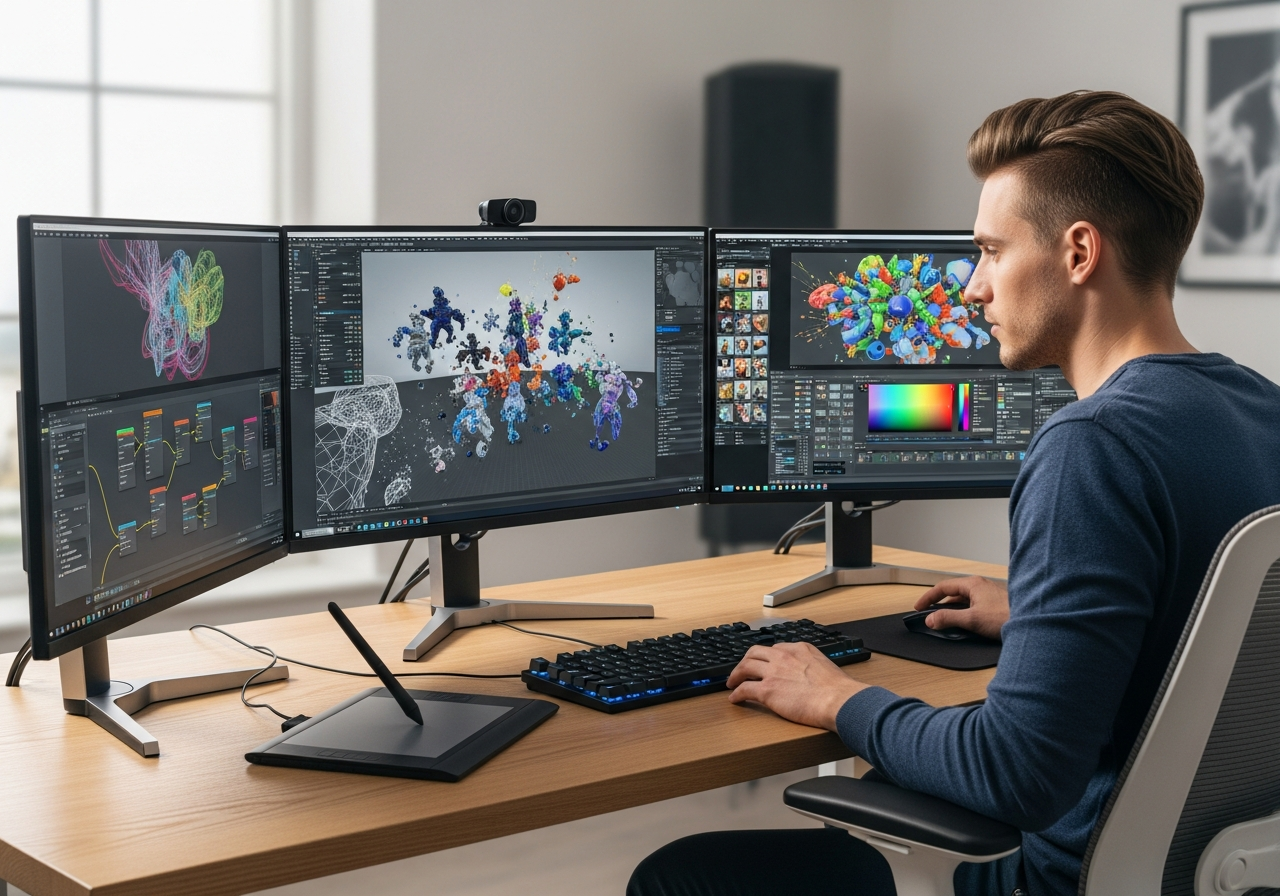
The Canadian VFX industry has experienced dramatic shifts in employment patterns, with entry-level job opportunities declining by 22% in 2024 as remote work policies reshape the competitive landscape. This transformation presents a complex duality for junior prospects, who must navigate both expanded global access and intensified competition in an increasingly digital-first hiring environment.
As hybrid work models are projected to dominate 61% of VFX job postings by 2026, understanding how remote policies impact career entry becomes crucial for new graduates and career changers seeking to establish themselves in Canada’s evolving visual effects sector.
Evolution of Remote Work in Canada’s VFX Industry
The COVID-19 pandemic fundamentally altered the operational framework of Canada’s VFX industry, accelerating a remote work transition that might have taken decades to implement under normal circumstances. Before 2020, the industry relied heavily on centralized studio environments where collaborative workflows and high-end hardware requirements made remote operations seem impractical for most production pipelines.
The sudden shift to remote work exposed both the potential and limitations of distributed VFX production. While established professionals with home studios and industry connections adapted relatively quickly, entry-level talent faced unique challenges in demonstrating their capabilities without direct studio access. The growth in global talent accessibility has paradoxically offset opportunities for junior-level positions, as studios can now recruit experienced professionals from international markets without geographical constraints.
This evolution has created a more competitive environment where traditional entry pathways through local studios have been supplemented—and sometimes replaced—by global talent pools. The industry’s rapid adaptation to remote workflows has permanently changed expectations around workplace flexibility, setting the stage for long-term structural shifts in how VFX companies recruit and develop new talent.
The technological infrastructure supporting remote VFX work continues to mature, with cloud-based rendering solutions and collaborative platforms becoming more sophisticated. However, the initial learning curve and investment requirements for remote-ready setups have created additional barriers for those just entering the field, fundamentally altering the traditional apprenticeship model that characterized VFX career development.
Pandemic Acceleration and Tech Enablers
The rapid adoption of remote collaboration tools like Zoom, Slack, and cloud-based asset management systems initially created significant workflow disruptions that particularly affected junior staff members. Unlike senior artists who could leverage existing client relationships and proven track records, entry-level candidates struggled to demonstrate their capabilities through virtual interactions and remote project reviews. Technical challenges around secure file transfer, remote desktop access, and collaborative editing created additional learning curves for newcomers.
Home-based hardware requirements became a significant barrier for many entry-level candidates who lacked the high-performance workstations, professional monitors, and reliable internet connections necessary for demanding VFX work. While studios gradually developed equipment lending programs and remote workspace stipends, the initial period saw many junior positions eliminated as companies focused on maintaining productivity with their most experienced team members.
The technology gap between what entry-level candidates could afford independently and what professional VFX work demanded created a new form of digital divide within the industry. This disparity has influenced hiring practices, with many studios now requiring candidates to demonstrate home-based technical capabilities as part of the application process, adding another layer of complexity to entry-level job searches.
Shift to Hybrid Models by 2026
Industry forecasts indicate that hybrid work arrangements will appear in 61% of VFX job postings by Q4 2025, representing a fundamental shift toward more flexible employment models. This transition acknowledges both the benefits of remote collaboration and the continued importance of in-person creative sessions, particularly for complex problem-solving and mentorship activities that benefit entry-level professionals.
The hybrid model offers improved access to VFX talent across broader geographical areas while maintaining opportunities for hands-on learning and career development. For entry-level candidates, this evolution suggests that future job searches will require adaptability to both remote and in-person work environments, with successful applicants demonstrating competence in virtual collaboration tools alongside traditional artistic and technical skills.
Current VFX Job Market Challenges in Canada
Canada’s VFX job market faces unprecedented pressures as domestic production volumes fluctuate while international competition for talent intensifies. The 22% decline in entry-level positions reflects broader industry consolidation and efficiency improvements enabled by remote work technologies. Studios have streamlined operations by accessing global talent pools, often prioritizing experienced professionals who can contribute immediately to project deliveries without extensive training periods.
Foreign productions have paradoxically benefited from Canada’s remote work infrastructure, allowing international companies to tap into Canadian talent without establishing physical presence or navigating complex employment regulations. This dynamic has created additional competition for local entry-level positions, as overseas employers can offer attractive packages to Canadian VFX professionals while operating with different cost structures and regulatory frameworks.
The market transformation has particularly impacted traditional career progression pathways, where junior artists historically advanced through mentorship relationships and gradual skill development within stable studio environments. Remote work policies have disrupted these organic learning opportunities, forcing the industry to develop new approaches to talent development and career advancement for entry-level professionals.
| Factor | Pre-2020 | 2024-2026 | Impact on Entry-Level |
|---|---|---|---|
| Hiring Geography | Local/Regional Focus | Global Talent Pool | Increased Competition |
| Training Approach | In-Person Mentorship | Virtual Learning | Reduced Mentorship Quality |
| Equipment Access | Studio-Provided Hardware | Home Setup Required | Financial Barrier to Entry |
| Project Collaboration | Face-to-Face Reviews | Digital-First Workflows | Harder to Stand Out |
| Job Market Size | Stable Growth | 22% Decline | Fewer Entry Opportunities |
Decline in Domestic vs. Foreign Production
Ontario’s VFX sector exemplifies broader national trends, where government incentives and tax credits have historically attracted major international productions. However, the shift to remote work has enabled foreign studios to access Canadian talent without establishing local production facilities, reducing the multiplier effect that traditionally supported entry-level employment growth. This dynamic has particularly affected Toronto and Montreal, where large-scale productions previously generated numerous junior positions across multiple studios.
Global subsidies and competitive exchange rates in other jurisdictions have created additional pressure on Canadian VFX companies, forcing them to optimize operations and reduce overhead costs. Entry-level positions, which require significant training investment and supervisory time, have become particularly vulnerable to these efficiency drives as studios focus on maintaining profitability in an increasingly competitive international marketplace.
Remote Policies: Opportunities for Entry-Level Talent
Despite the challenges, remote work policies have created unprecedented opportunities for entry-level VFX talent willing to adapt to new working models. The geographical barriers that previously limited job searches to specific metropolitan areas have largely dissolved, allowing candidates to apply for positions across the country and internationally. This expanded market access particularly benefits talent in smaller cities or rural areas who previously faced relocation requirements as a barrier to industry entry.
Remote work has also democratized access to industry knowledge and training resources, with online learning platforms, virtual mentorship programs, and digital collaboration tools providing alternative pathways to skill development. Entry-level candidates can now build portfolios, participate in virtual projects, and establish professional networks without the traditional gatekeeping structures of physical studio environments.
The shift toward skills-based hiring over location-based recruitment has opened doors for diverse talent pools, including candidates with non-traditional backgrounds who can demonstrate technical competence and creative vision through digital portfolios. However, these opportunities come with the caveat that competition has intensified proportionally, requiring entry-level candidates to develop stronger self-marketing and remote collaboration skills.
- Expanded Geographic Reach: Remote policies eliminate relocation barriers, allowing candidates to access opportunities across Canada and internationally without geographic constraints
- Flexible Scheduling Options: Hybrid arrangements enable entry-level professionals to balance multiple projects, freelance work, or continued education while building industry experience
- Reduced Overhead Costs: Working from home eliminates commuting expenses and professional wardrobe requirements, making entry-level positions more financially viable for recent graduates
- Digital Portfolio Development: Remote-first workflows emphasize digital presentation skills, allowing technically proficient candidates to showcase abilities through online portfolios and virtual demonstrations
- Access to Global Training: Online learning platforms and virtual workshops provide cost-effective skill development opportunities previously available only through expensive in-person programs
- Diverse Collaboration Experience: Remote teams expose entry-level professionals to varied working styles and international perspectives that enhance adaptability and cross-cultural communication skills
Access to Broader Talent Pools
Hybrid work models have fundamentally improved entry-level mobility within the Canadian VFX industry, allowing talent to pursue opportunities across provincial boundaries without the significant personal and financial costs of relocation. This geographical flexibility has particularly benefited candidates in Atlantic Canada and Prairie provinces, where local VFX opportunities were historically limited but talent could now access positions in major markets like Vancouver, Toronto, and Montreal.
The inclusivity benefits of remote work extend beyond geography to accommodate diverse personal circumstances, including candidates with mobility constraints, caregiving responsibilities, or other factors that might have previously limited their ability to work in traditional studio environments. This expanded inclusivity has enriched the industry’s talent pipeline while providing entry-level opportunities to previously underrepresented groups.
Flexibility for New Graduates
Remote work policies have significantly reduced the relocation pressures that traditionally accompanied VFX career entry, allowing new graduates to begin building industry experience while maintaining personal support networks and managing educational debt loads more effectively. This reduced geographic mobility requirement has made VFX careers more accessible to candidates from diverse economic backgrounds who might not have been able to afford major relocations to industry centers.
Immigration policies such as the C14 stream and various Provincial Nominee Programs have been enhanced by remote work options, making it easier for international graduates of Canadian VFX programs to establish careers without the additional complexity of securing local employment in specific geographic regions. These policy synergies have improved the overall value proposition of Canadian VFX education for both domestic and international students.
Challenges for Entry-Level VFX Job Seekers
The globalization of VFX hiring through remote work policies has intensified competition for entry-level positions, as Canadian candidates now compete directly with international talent pools offering diverse skill sets and potentially lower salary expectations. This expanded competition has raised the bar for entry-level qualifications, with studios increasingly expecting candidates to demonstrate advanced technical skills, professional-quality demo reels, and remote collaboration experience before consideration.
Remote hiring processes have introduced new bottlenecks that particularly disadvantage entry-level candidates, including portfolio review systems that favor established artists with extensive bodies of work over promising newcomers with limited but high-quality samples. The shift from in-person interviews to virtual assessments has also reduced opportunities for candidates to demonstrate personality, work ethic, and potential that might override technical limitations in their early-career portfolios.
The reduced emphasis on local networking and relationship-building has disrupted traditional pathways into the industry, where entry-level positions often resulted from informal connections, studio visits, and community involvement. Remote-first hiring tends to prioritize quantifiable skills and digital presence over the soft skills and cultural fit considerations that previously provided alternative routes to industry entry for motivated candidates with developing technical abilities.
Virtual onboarding and training processes have proven less effective for skill development than traditional apprenticeship models, creating longer development timelines for entry-level professionals and potentially affecting their long-term career progression. The reduced informal learning opportunities that naturally occurred in shared studio spaces have placed greater responsibility on individual initiative and self-directed professional development.
| Challenge | Remote Impact | Entry-Level Specific |
|---|---|---|
| Portfolio Competition | Global talent showcase | Limited work samples vs experienced artists |
| Mentorship Access | Virtual relationships less effective | Reduced learning curve support |
| Technical Requirements | Home studio setup costs | Financial barrier without industry income |
| Networking Opportunities | Reduced informal interactions | Harder to build industry connections |
| Skill Verification | Digital-only assessment methods | Cannot demonstrate potential through personality |
| Project Visibility | Virtual collaboration reduces presence | Less opportunity to impress supervisors |
| Cultural Integration | Studio culture harder to absorb remotely | Longer adjustment period affects performance reviews |
Global Competition and Visibility Issues
Remote work has leveled the playing field for global VFX hiring, but this democratization has inadvertently sidelined local entry-level candidates who previously benefited from geographic proximity and regional hiring preferences. International candidates with equivalent or superior qualifications can now compete directly for Canadian positions, often with competitive salary expectations that reflect different cost-of-living structures in their home markets.
The digital-first evaluation process has reduced opportunities for entry-level candidates to differentiate themselves through intangible qualities like enthusiasm, work ethic, or cultural fit that might compensate for gaps in their technical portfolios. Virtual interviews and remote collaboration assessments tend to favor candidates who can immediately demonstrate professional-level competence over those with high potential but developing skills.
Entry-level professionals working remotely face additional challenges in building visibility within their organizations, as the informal interactions and spontaneous collaboration opportunities that previously helped junior staff establish relationships with senior team members and project leads have been significantly reduced. This reduced visibility can impact career advancement opportunities and internal referral networks that traditionally supported professional growth within the VFX industry.
Regional Variations Across Canadian Provinces
The adoption and impact of remote work policies in the VFX sector varies significantly across Canadian provinces, reflecting differences in industry maturity, government support programs, and local market conditions. British Columbia leads in hybrid work adoption, leveraging its established VFX infrastructure and proximity to international markets to create flexible employment models that attract both domestic and foreign talent.
Provincial variations in immigration policies, tax incentives, and educational programs have created distinct competitive advantages for entry-level job seekers, with some regions offering more accessible pathways to industry entry through remote work opportunities than others. Understanding these regional differences has become crucial for entry-level candidates developing job search strategies in the evolving Canadian VFX marketplace.
- British Columbia: Leads in hybrid VFX adoption with 73% of studios offering flexible arrangements, supported by strong government incentives and established industry infrastructure
- Ontario: Maintains largest absolute job volume despite 18% remote-work-related decline, with Toronto-Montreal corridor showing resilient demand for entry-level positions
- Quebec: Benefits from language requirements that reduce international competition while offering competitive tax credits and growing remote work acceptance
- Alberta: Emerging market with 45% growth in remote VFX opportunities, driven by diversification initiatives and competitive operating costs
- Atlantic Canada: Shows highest percentage growth in remote opportunities (127%) due to low baseline and targeted economic development programs
Vancouver and BC Tech Streams
British Columbia’s Provincial Nominee Program and federal immigration streams have adapted effectively to support remote work arrangements, making it easier for international VFX talent to establish permanent residence while working for BC-based companies regardless of their physical location. This flexibility has strengthened BC’s position as a hub for VFX talent acquisition and has created spillover opportunities for entry-level candidates who can access mentorship and networking opportunities within this expanded ecosystem.
The integration of hybrid work policies with BC’s immigration programs has created unique advantages for international graduates of Canadian VFX programs, allowing them to maintain connections with BC employers while establishing residence and building experience through remote work arrangements. This policy synergy has enhanced the value proposition of BC’s educational institutions and created more diverse pathways to permanent residence for entry-level VFX professionals.
Emerging Regional Opportunities
Atlantic Canada’s rapid growth in remote VFX opportunities reflects targeted government initiatives to diversify regional economies and attract tech sector employment. Programs specifically designed to support remote work infrastructure and digital skills development have created unexpected entry-level opportunities in provinces traditionally considered peripheral to the VFX industry, offering alternatives to candidates priced out of major metropolitan markets.
Strategies for Entry-Level Success in Remote VFX Job Hunt
Success in the remote-first VFX job market requires entry-level candidates to develop strategic approaches that leverage the unique advantages of digital hiring while mitigating its inherent challenges. Building a competitive presence in virtual marketplaces demands more sophisticated self-marketing skills and portfolio curation than traditional job search methods, with successful candidates typically investing significant time in developing their digital brand and online professional presence.
The shift toward hybrid job postings by 2026 suggests that future entry-level candidates will need to demonstrate competence in both remote collaboration tools and in-person creative processes, requiring a broader skill set than previous generations of VFX professionals. Strategic job applications should target hybrid opportunities that offer the benefits of flexible work arrangements while maintaining access to mentorship and career development resources.
Selective application strategies have become more important as the volume of global competition has increased, with successful entry-level candidates focusing their efforts on positions that align closely with their skill sets and career objectives rather than pursuing broad-based application approaches. This targeted methodology requires deeper research into potential employers and more customized application materials, but typically yields higher response rates and better job matches.
| Strategy | Why It Works in Remote Era | Canada-Specific Tips |
|---|---|---|
| Professional Demo Reel | Primary evaluation tool for remote hiring | Include work that showcases Canadian content familiarity |
| LinkedIn Optimization | Digital networking replaces in-person connections | Connect with Canadian VFX professionals and recruiters |
| Remote Collaboration Skills | Essential competency for distributed teams | Highlight experience with Canadian work schedules and time zones |
| Continuous Learning Documentation | Demonstrates self-direction in remote environment | Focus on Canadian-funded training programs and certifications |
| Technical Setup Investment | Home studio capability now baseline requirement | Research equipment financing options and tax deductions |
| Hybrid Position Targeting | Balances remote flexibility with mentorship access | Prioritize companies within commutable distance of major cities |
| Virtual Portfolio Presentations | Replaces traditional in-person portfolio reviews | Practice presenting during Canadian business hours for timing fluency |
| Industry Community Engagement | Digital communities replace physical networking events | Join Canadian VFX Discord servers and professional associations |
Building a Competitive Remote Portfolio
Demo reels have become the critical differentiator in remote VFX hiring, requiring entry-level candidates to invest significantly more effort in curating and presenting their work than was traditionally necessary for in-person interviews. Successful remote portfolios demonstrate not only technical competence but also the ability to work independently and communicate creative decisions effectively through digital mediums, skills that have become essential for remote collaboration environments.
The digital presentation format allows entry-level candidates to showcase their work more comprehensively than traditional portfolio reviews, including breakdown videos, process documentation, and collaborative project examples that demonstrate their ability to contribute effectively to remote team workflows. However, this expanded format also requires candidates to develop video editing, presentation design, and digital marketing skills that extend well beyond traditional VFX competencies.